When I was 11 years old, I was supposed to give a speech to my class at school. For some reason, I didn’t do any work on it. And when I say I didn’t work on it, I mean literally nothing.
I had a subject, but I did no preparation and didn’t have a speech written. It was a shambles, although I did get a bunch of laughs but not necessarily in the right way. After that, I hated speaking in public.
So, for the next two decades or so, I did everything I could to avoid it, and I know that I am not alone with that. According to most studies, people's number one fear is public speaking. Number two is death or sometimes spiders. It is a big call to prefer to die rather than delivering a speech. Jerry Seinfield says that means that at a funeral most people would prefer to be the dead one rather than delivering the eulogy.
I remember watching someone present to a group over 20 years ago and thinking to myself that I would hate to do that. I now find it quite funny that speaking to groups large and small is not that uncommon for me and most of the time I quite enjoy it. Sometimes I love it. Doesn’t mean nerves aren’t still there but they don’t stop me like they used to.
People have different ways of getting over their fears and phobias, but for me I just did more of it. I took a course, practiced and steadily got better at speaking and presenting to audiences. I also made a rule for myself: if I was asked to speak, I had to do it. It worked well for me, but the reality is that fear holds us all back in so many different areas.
According to our research the biggest frustration with NZ and AUS sales leaders is a lack of business development happening with their sales team. Why is that? I can tell you right now that the main reason it doesn’t happen is the fear of rejection. Fear is also the main reason why salespeople don’t hold their ground in negotiation. Fear of losing the deal. The most successful prospectors and negotiators will put these fears aside.
Last year we had the pleasure of having big wave surfer Mark Matthews do a session with us. What those guys do is absolutely frightening but speaking was still his number one fear. We had a bit of time before the online session, so I introduced him to my son, who asked him, "How do you get over the fear of riding those monster waves?" His answer was simple; training and doing more of it. The more often you do things outside of your comfort zone, the less fear plays a role and the better prepared you are to be able to handle it.
We also recently welcomed a guest to our Expert Series named Dr Paul Taylor, who is a psychophysiologist, meaning he studies the relationship between the mind and the body. He is all about building "hardiness," which is a close cousin of resilience. His point is that we all need to do things that scare us regularly. You literally cannot get better without it.
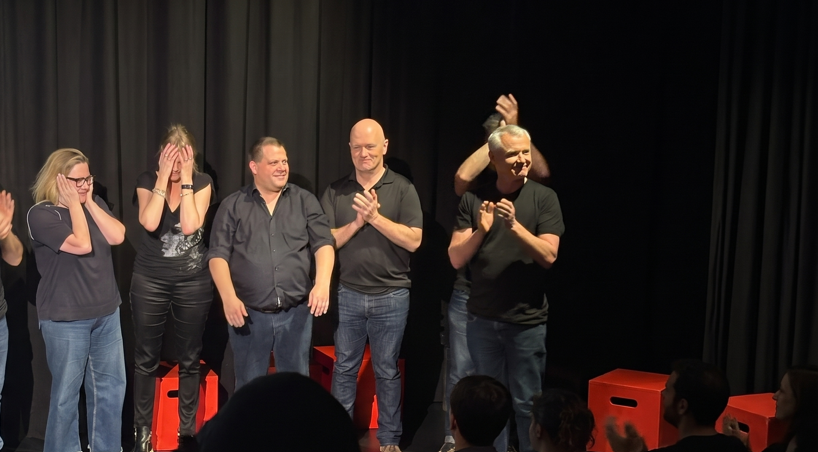
One last story from me. Last year the Indicator Team had the opportunity to compete in the NZ Improv Championships, which I can tell you brought up some mixed emotions. We didn’t necessarily want to do it, and initially many on the team said, "No way." But those of us who did it absolutely loved it (most of the time). It was full on, bit awkward, quite funny and out of the comfort zone experience in front of live audiences. In the end, we were stoked to have done it. We learned a lot and the Indicator team even managed to get second place (we might also have been robbed, just saying ...).
Think of how many times you can apply that mindset of being willing to get out of your comfort zone in a business sense:
- Putting your hand up for a role that you feel may be a big step for you
- Delivering a speech or a presentation.
- Picking up the phone to make a prospecting call.
- Negotiating a deal where you don’t "drop your trousers" just because you are concerned about losing the client.
- Saying no to a difficult client when you know you are in the right
It's a simple message here: we all need to do something that scares us regularly. At best, choosing to live life in the comfort zone keeps you exactly where you are right now.